We are processing your request.
Please, don’t close or refresh the page.
Lisbon Tickets Arco Rua Augusta Praca Do Comercio
Rua Augusta Arch on Praça do Comércio, Lisbon

Rua Augusta Arch and Praça do Comércio Guide

Lisbon's riverside square was a royal palace until 1755, and the triumphal arch on its north side marks the city's rebuilding. What happened here, what the statues mean and what you see from the top.

Praça do Comércio is the square where Lisbon meets the Tagus, and the Rua Augusta Arch is the gateway from the square into the Baixa, the grid of streets rebuilt after the 1755 earthquake. Most people cross the square on foot; fewer know that a royal palace stood here for two centuries, that a king was killed in the square in 1908, or that you can climb to the top of the arch for a 360º view over the city and the river. This guide tells the square's story, explains the arch and its statues, and describes the viewpoint. For visiting times and transport, see our Arco da Rua Augusta visitor guide.

4.7
(20)

Arco da Rua Augusta Observation Deck: Admission Ticket

Highlights

Marvel at panoramic vistas of the Lisbon harbor and cityscape from an iconic monument.

Explore unique sculptures crafted by renowned artist Célestin Anatole Calmels.

Witness the symbolic significance of an arch built after the devastating 1755 earthquake.

Enjoy a historic setting combined with some of the city’s best lookout points.

Easily locate the entrance with clear guidance and benefit from elevator access partway up the arch.
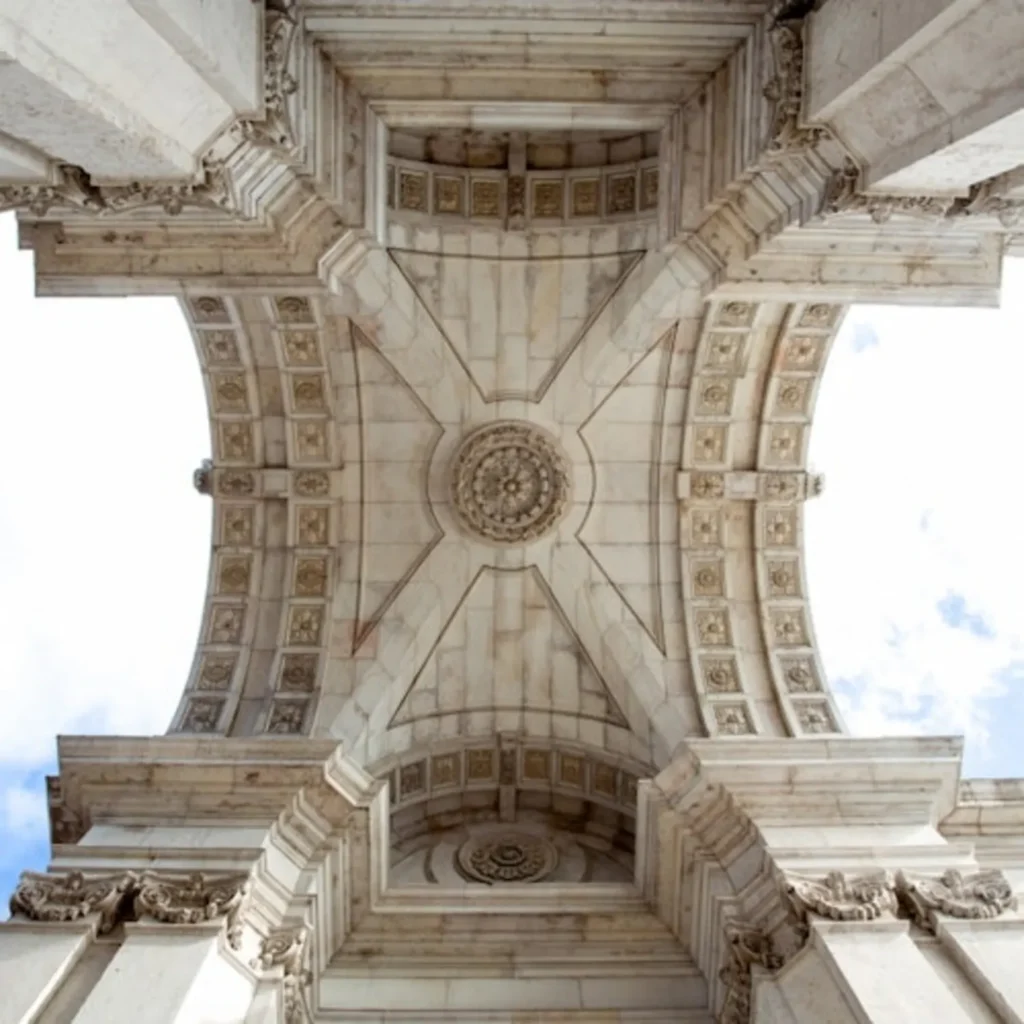
Praça do Comércio and the arch: key facts

The square is officially Praça do Comércio but is still known as Terreiro do Paço, the Palace Yard.

King Manuel I built the Ribeira Palace here in the early 16th century; the 1755 earthquake, tsunami and fire destroyed it.

The square measures 175 by 175 metres, open on one side to the river.

The equestrian statue of King José I, by Joaquim Machado de Castro, was inaugurated in 1775.

The arch was built to commemorate the rebuilding of Lisbon after 1755 and was completed in 1873.

On 1 February 1908, King Carlos I and his heir, Luís Filipe, were shot dead in the square.

From royal palace to commercial square
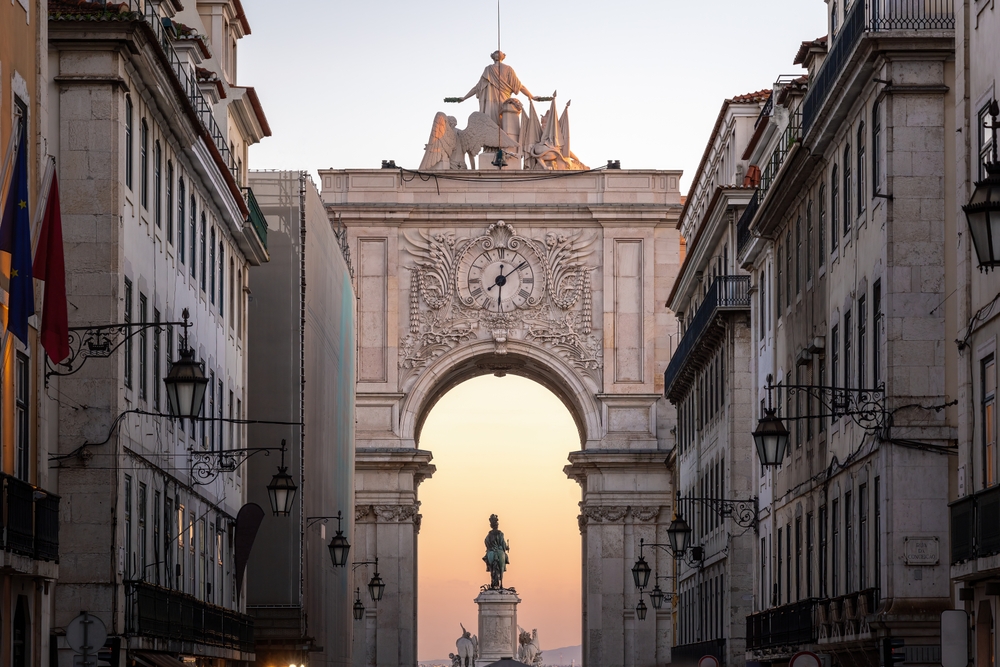
Rua Augusta Arch on Praça do Comércio, Lisbon

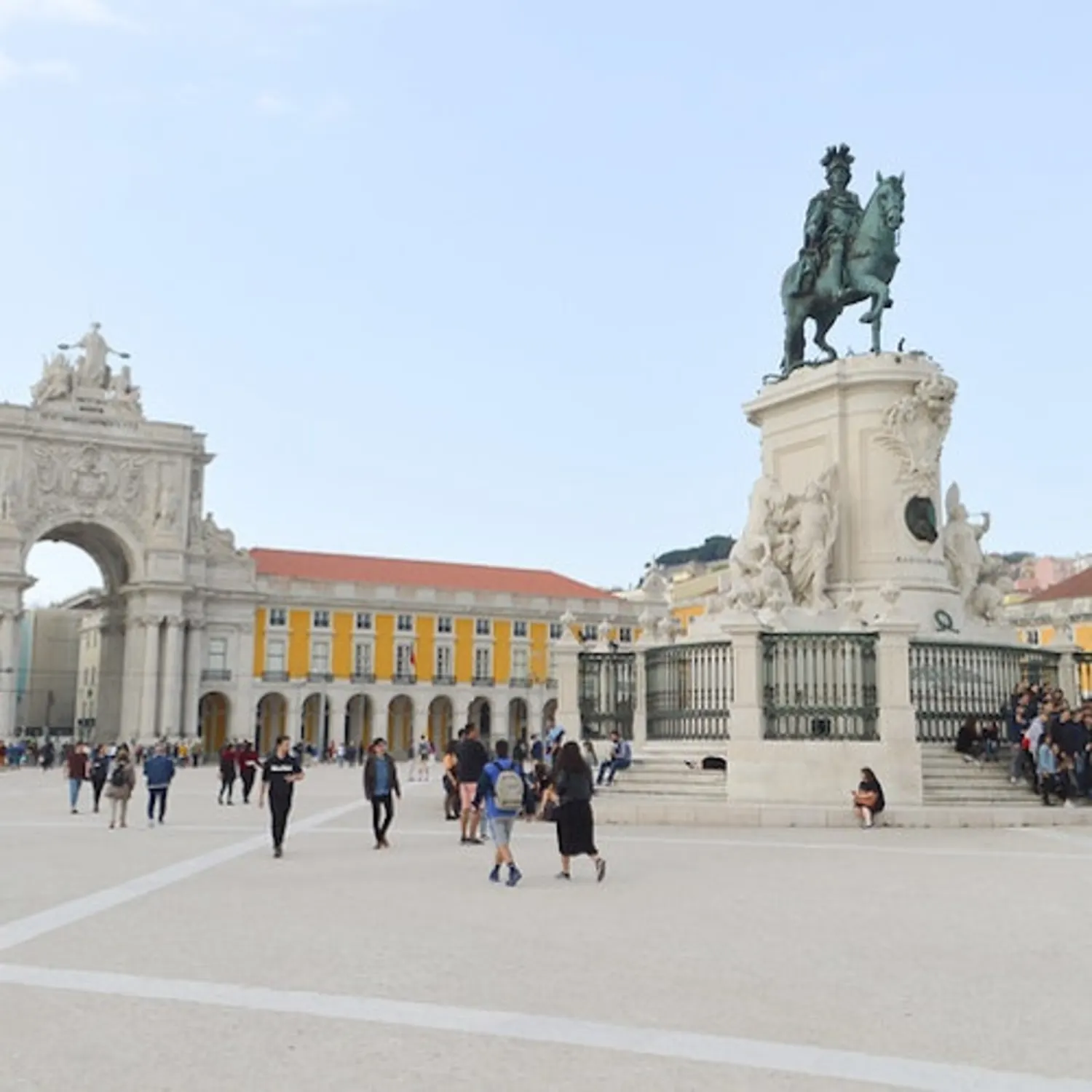
For more than two centuries this was the setting of royal power. King Manuel I built the Ribeira Palace by the Tagus in the early 16th century, and the square in front of it took the name Terreiro do Paço, the Palace Yard, which Lisboners still use.

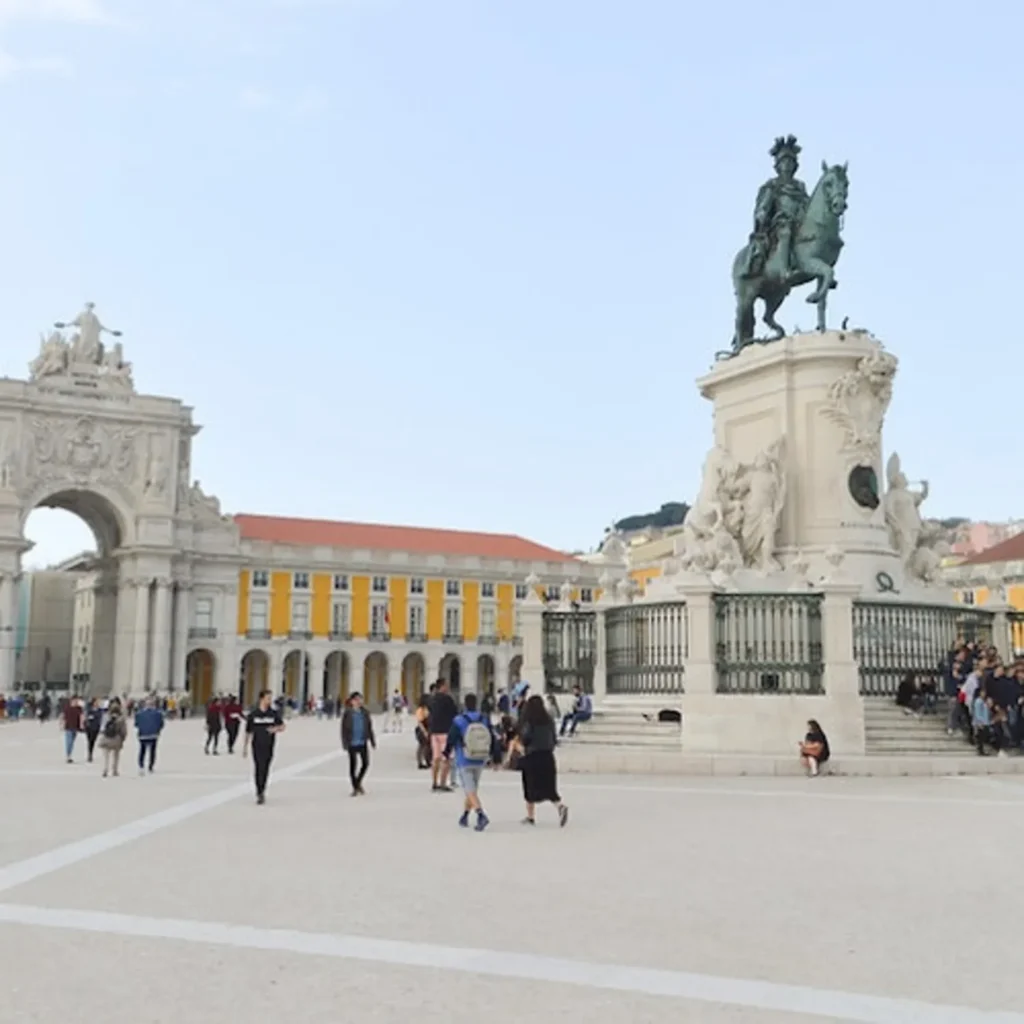
In 1755 the earthquake, followed by a tsunami and fire, destroyed the palace. Under the Marquis of Pombal, the architect Eugénio dos Santos designed a new square: a large rectangle shaped like a U, open to the river. Its official name became Praça do Comércio, the Commerce Square.

From the 19th century the arcaded buildings housed ministries and the Supreme Court. The square is home to Martinho da Arcada, founded in 1782 and the oldest café in the city, and the Museum of Lisbon occupies the square's western tower.

The statue of King José I

Rua Augusta Arch on Praça do Comércio, Lisbon

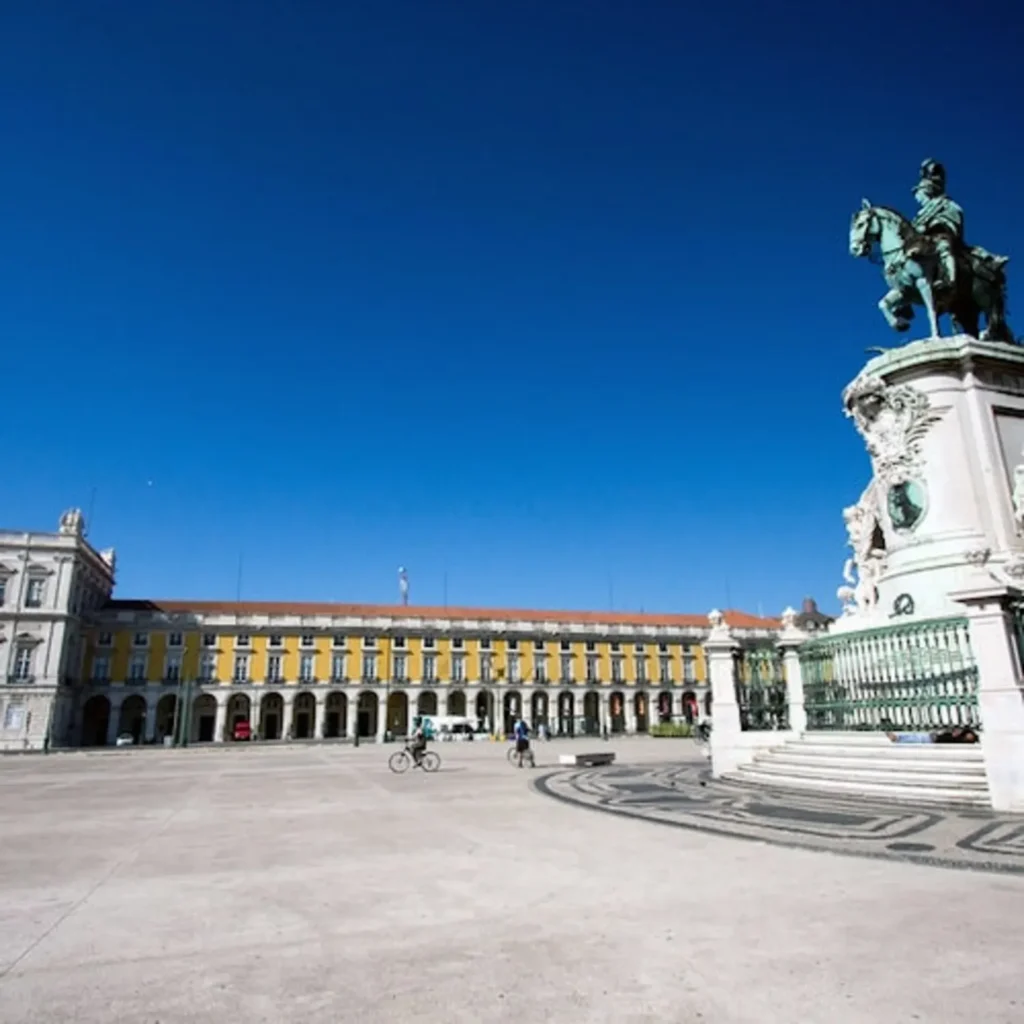
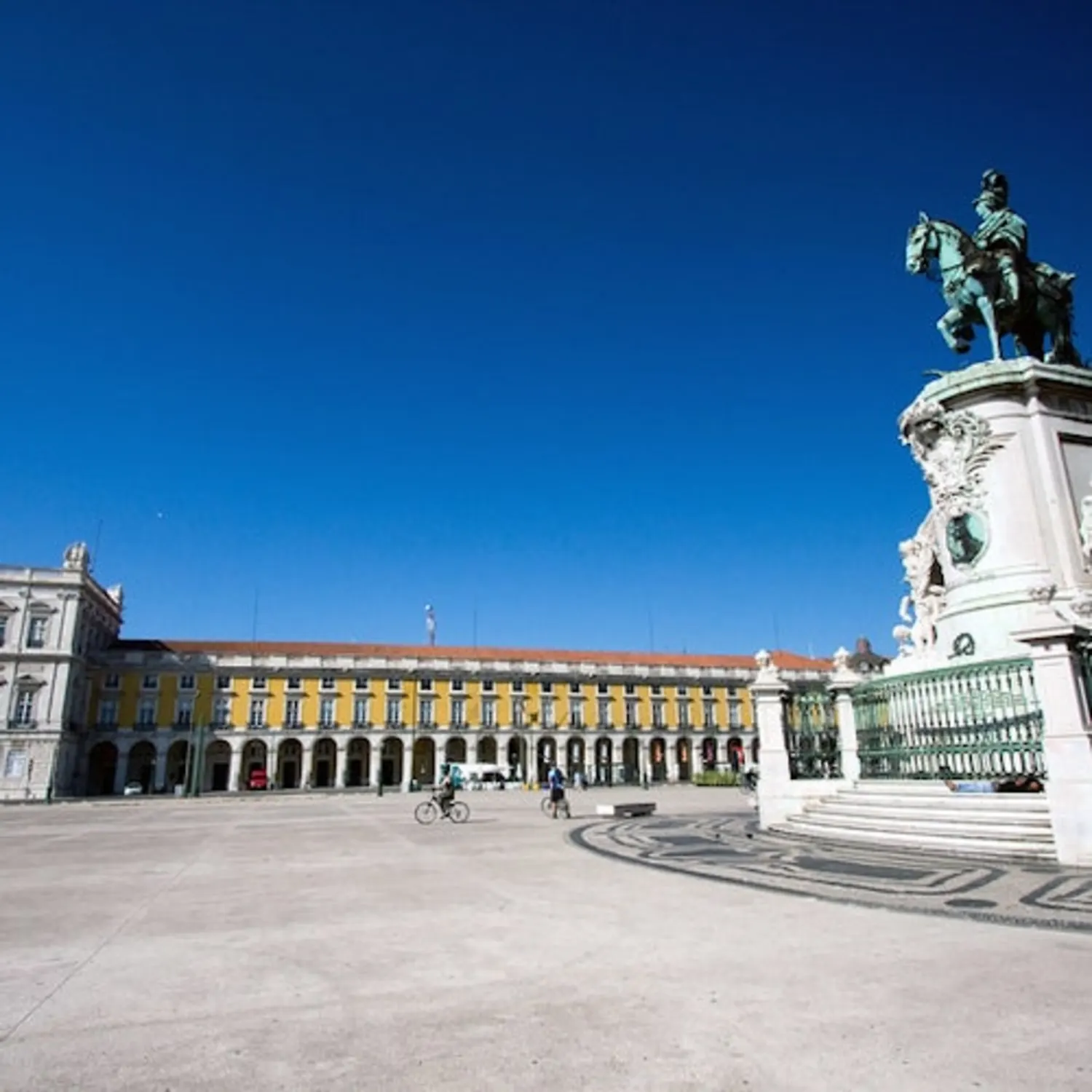
At the centre of the square stands the bronze equestrian statue of King José I. It was designed by the sculptor Joaquim Machado de Castro and inaugurated in 1775.

Together with the arch on the north side and the river on the south, it forms the centrepiece of the square Eugénio dos Santos designed after the earthquake.

The 1908 regicide

Rua Augusta Arch on Praça do Comércio, Lisbon

The square was also the scene of one of the turning points of modern Portuguese history. On 1 February 1908, in Praça do Comércio, shots fired from the crowd killed King Carlos I at once and mortally wounded his heir, Luís Filipe.

The monarchy ended two years later, with the Republic declared on 5 October 1910. The landau linked to the regicide is today kept at the National Coach Museum in Belém.

The arch and its statues

Rua Augusta Arch on Praça do Comércio, Lisbon

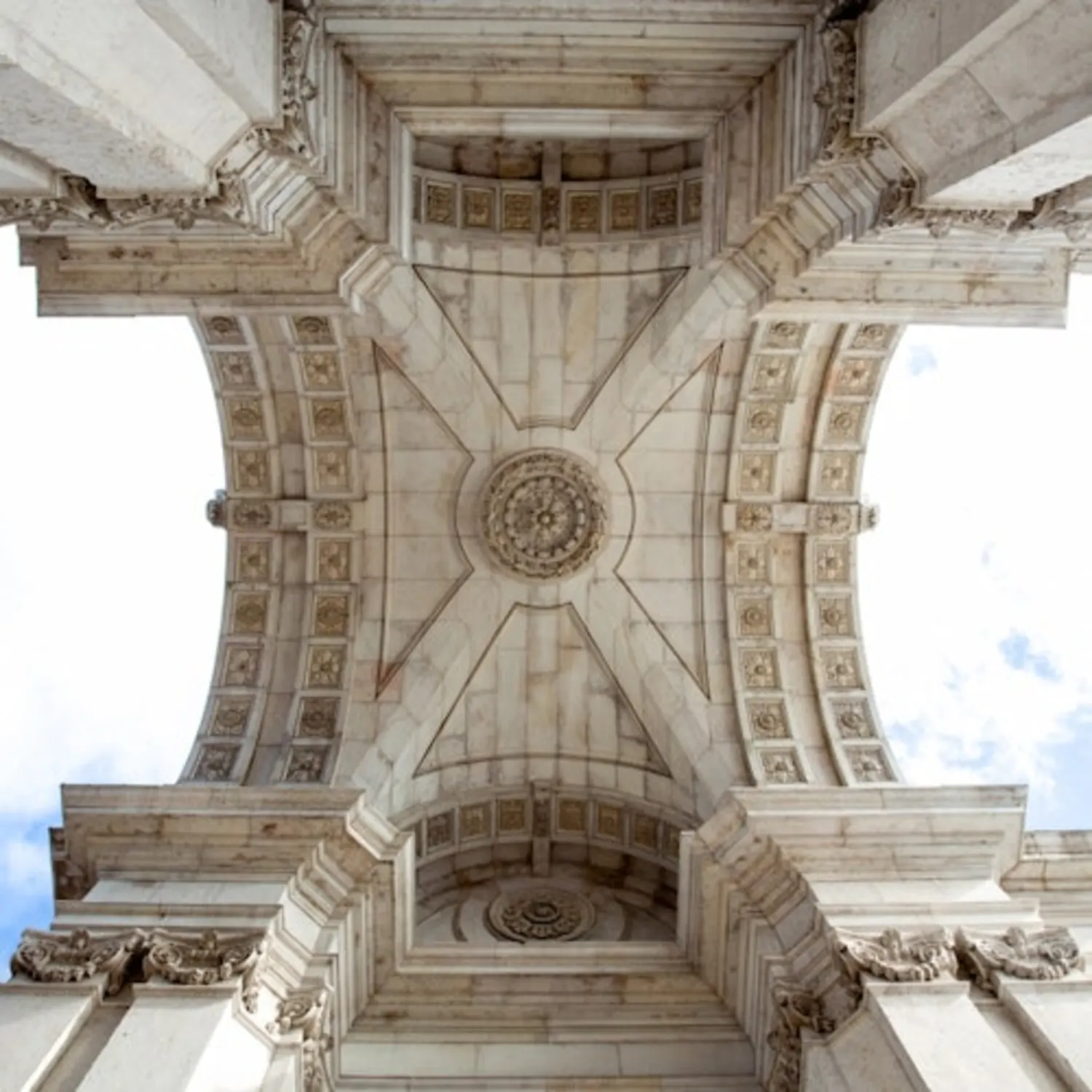
The Rua Augusta Arch was built to commemorate the city's reconstruction after the earthquake. Work started in 1755, the building was first designed as a bell tower, and the arch was only completed in 1873.

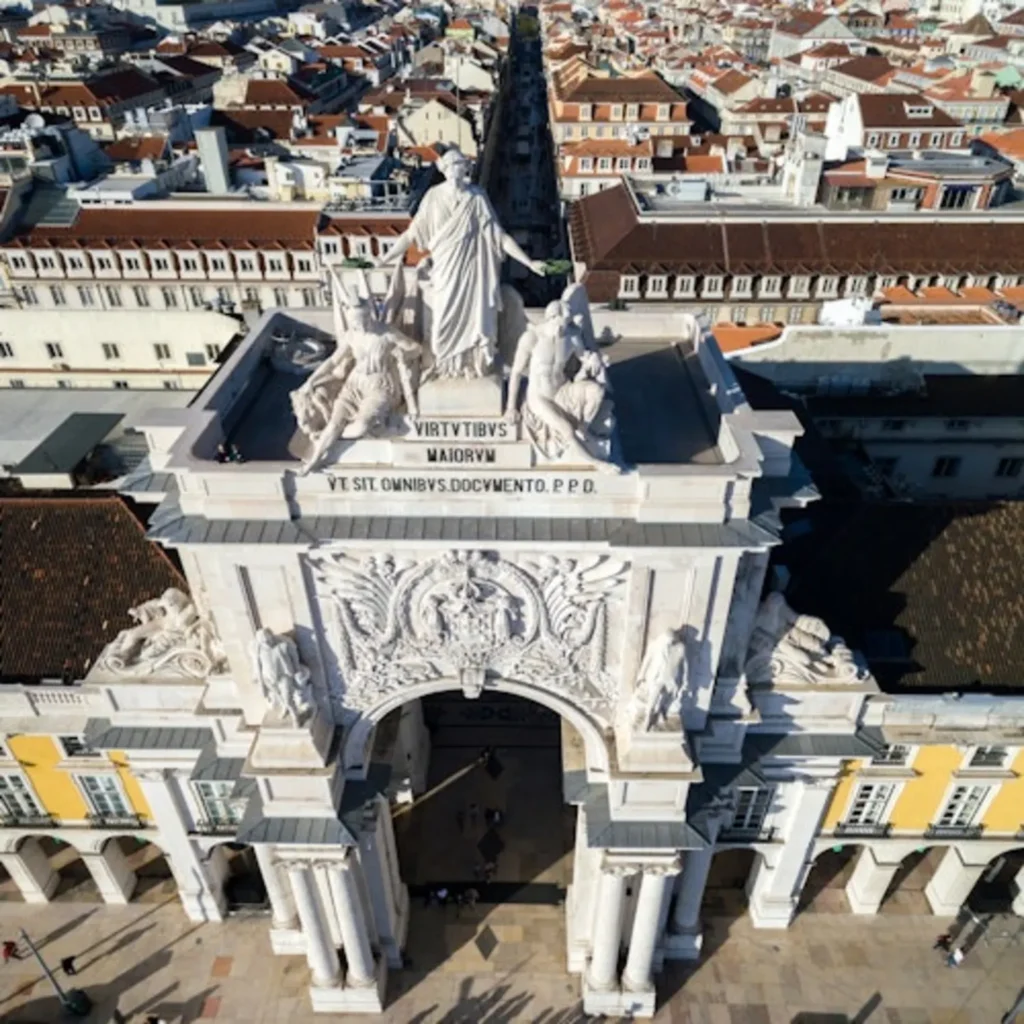
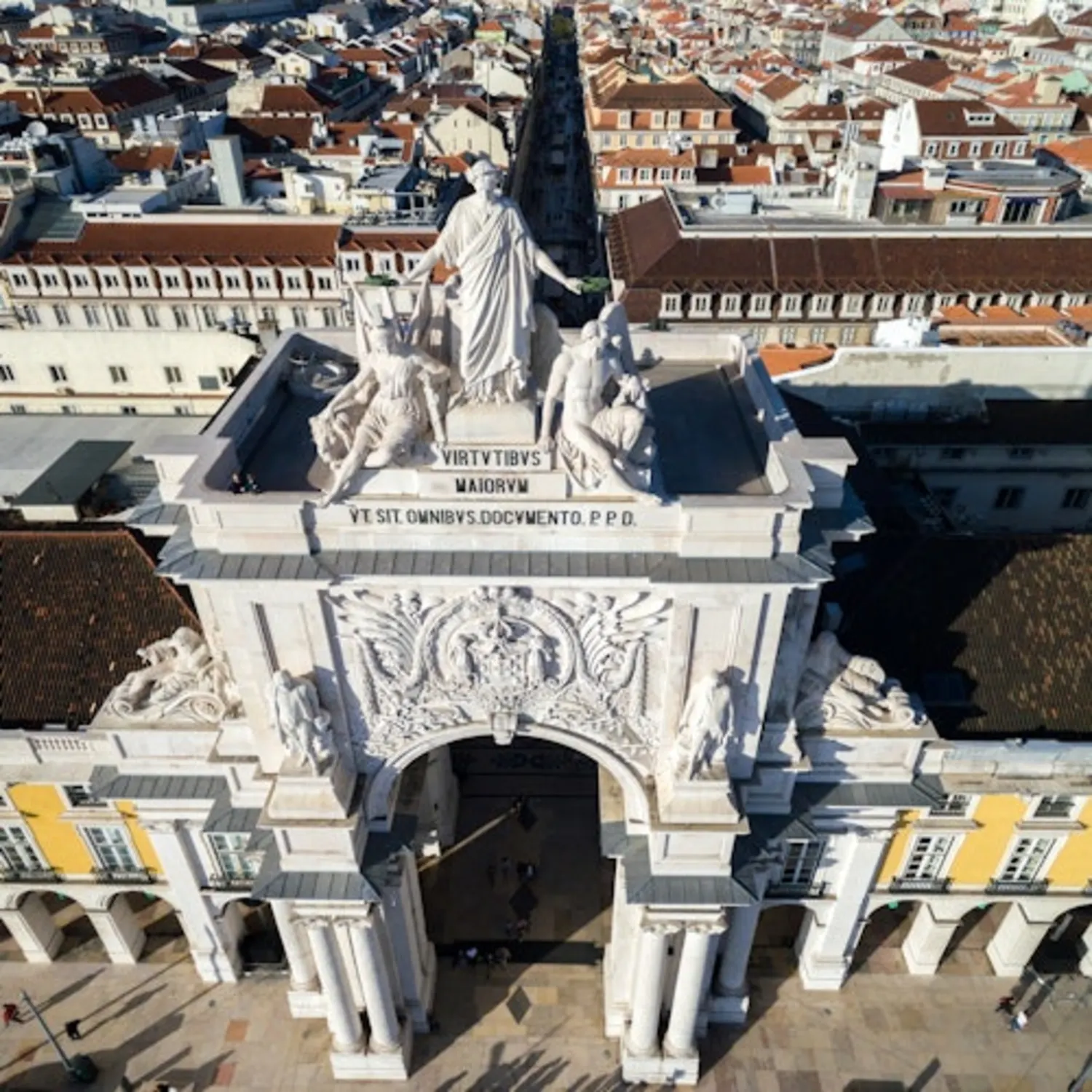
The top cornice stands more than 30 metres above the street. On top, the sculptor Célestin Anatole Calmels made the group of Glory crowning Valour and Genius; the figure of Glory alone is 7 metres tall. Below, statues by Victor Bastos show four figures from Portuguese history: Nuno Álvares Pereira and the Marquis of Pombal on one side, Vasco da Gama and Viriato on the other.

The Latin inscription on the arch honours the virtues of the greats, a tribute to the strength, resilience and achievements of the Portuguese people.

The view from the top

Rua Augusta Arch on Praça do Comércio, Lisbon

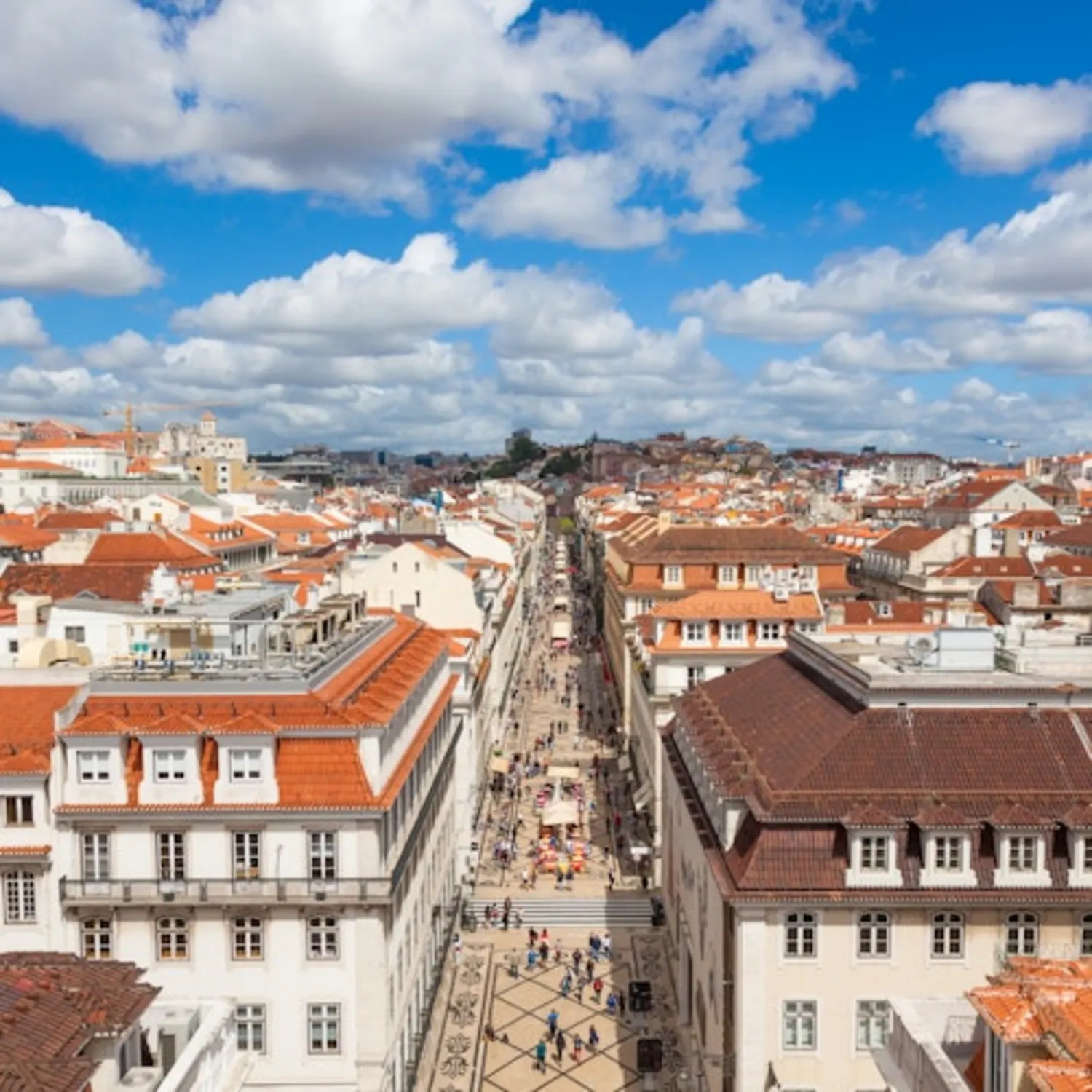
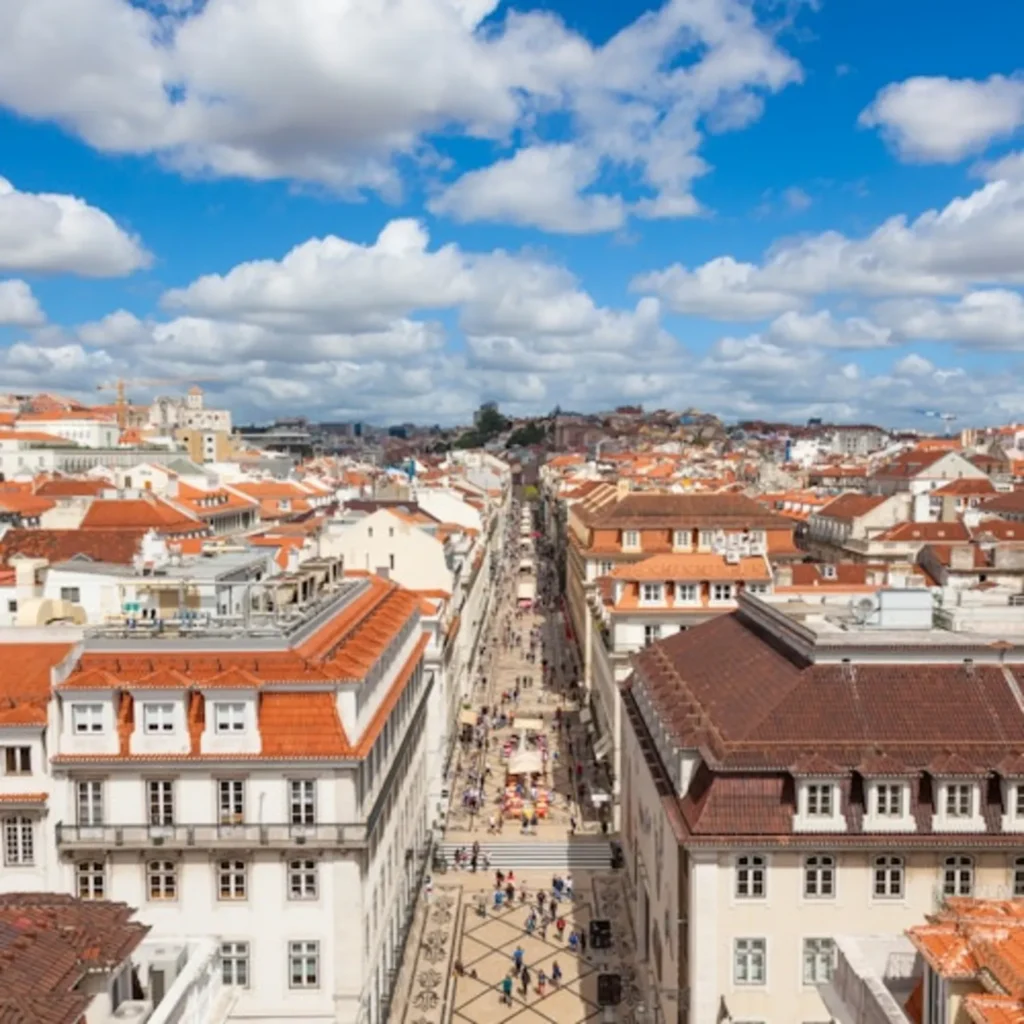
The top of the arch has been open to visitors since 9 August 2013. From the terrace you get a 360º view over the Baixa, Praça do Comércio and the Tagus river.

Inside the arch, the Clock Room (Sala do Relógio) holds an exhibition on the history of the triumphal arch, so you can learn its story as part of the visit.

Practical tips

Opening hours: the arch is open every day from 10:00 AM to 7:00 PM, with last entry at 6:30 PM.

Lisboa Card: entry is included with the Lisboa Card, which is one of the ticket options on our venue page.

Seeing the square: Praça do Comércio is a public square, open at all times; the ticket is for the viewpoint at the top of the arch.

Pair it with the castle: São Jorge Castle stands on the hill above the Baixa, so the two make an easy pair for one day.

Plan your visit to the arch

Walk the square first, then go up the arch for the view over everything you have just seen. Check the time slots shown for your date when you book your Arco da Rua Augusta tickets, and see our opening hours guide for last entry.

Praça do Comércio and the Rua Augusta Arch: frequently asked questions

Why is Praça do Comércio also called Terreiro do Paço?

Because the Ribeira Palace stood here until 1755. Terreiro do Paço means Palace Yard, and Lisboners still use the old name.

What happened to the Ribeira Palace?

King Manuel I built it in the early 16th century. The 1755 earthquake, followed by a tsunami and fire, destroyed it.

Who designed Praça do Comércio?

After the earthquake, the architect Eugénio dos Santos designed the new U-shaped square, open to the river, under the Marquis of Pombal.

Whose statue is in the middle of Praça do Comércio?

King José I, on horseback. The bronze statue by Joaquim Machado de Castro was inaugurated in 1775.

What happened in Praça do Comércio in 1908?

On 1 February 1908, King Carlos I and his heir, Luís Filipe, were shot dead in the square.

When was the Rua Augusta Arch built?

It was built to commemorate Lisbon's reconstruction after the 1755 earthquake and was completed in 1873.

Who are the statues on the Rua Augusta Arch?

Glory crowning Valour and Genius, by Célestin Anatole Calmels, on top; below, Nuno Álvares Pereira, the Marquis of Pombal, Vasco da Gama and Viriato, by Victor Bastos.

Can you go to the top of the Rua Augusta Arch?

Yes. The viewpoint at the top has been open since 9 August 2013 and gives a 360º view over the Baixa and the Tagus.

What is the Clock Room?

A room inside the arch with an exhibition on the history of the triumphal arch, part of the visit to the viewpoint.

What are the opening hours of the arch?

Every day from 10:00 AM to 7:00 PM, with last entry at 6:30 PM.

Is the arch included in the Lisboa Card?

Yes. Entry is included with the Lisboa Card, which is one of the ticket options on our venue page.

What is the oldest café on Praça do Comércio?

Martinho da Arcada, founded in 1782 and the oldest café in the city.

About this guide

Sources: Visit Lisboa, Arco da Rua Augusta; Wikipedia, Rua Augusta Arch; Wikipedia, Praça do Comércio.

This website offers official tickets for the venues listed, sold by Tourism Tickets. Please note, however, that it is not the official website of any of these venues.

The images and videos on this website may contain visual elements that have been created or enhanced using AI technology. They are provided for illustrative purposes only.