Nous traitons actuellement votre demande.
S’il vous plaît, ne fermez pas la page et ne la rafraîchissez pas.
Billets pour Lisbonne Cathédrale de Lisbonne

Lisbon Cathedral: Tickets and Info

Ce site Internet propose des billets officiels pour cette salle. Veuillez toutefois noter qu’il ne s’agit pas du site officiel de la salle.

Billets sur smartphone

Tout ce dont vous avez besoin, à portée de main !

Service client 24 h/24, 7 j/7

Nous sommes là pour vous aider à tout moment.

Confirmation immédiate

Recevez vos billets quelques s après votre achat

Avis vérifiés sur le 100%

Des avis authentiques provenant d’utilisateurs réels et vérifiés.

Des milliers de réservations chaque mois

Chaque mois, des milliers de personnes nous font confiance pour leurs réservations.

Cathédrale de Lisbonne

Lisbon Cathedral, also known as Sé de Lisboa, stands as the oldest church in Portugal’s capital, blending Romanesque, Gothic, and Baroque styles within its historic walls. Built on the site of a former mosque after the 1147 Siege of Lisbon, this iconic landmark offers visitors a unique opportunity to explore centuries of religious and architectural heritage. Discover the cathedral’s remarkable features, including sacred relics and stunning views from the choir loft. Secure your tickets today to experience this national monument firsthand and immerse yourself in Lisbon’s rich cultural past.

About Lisbon Cathedral

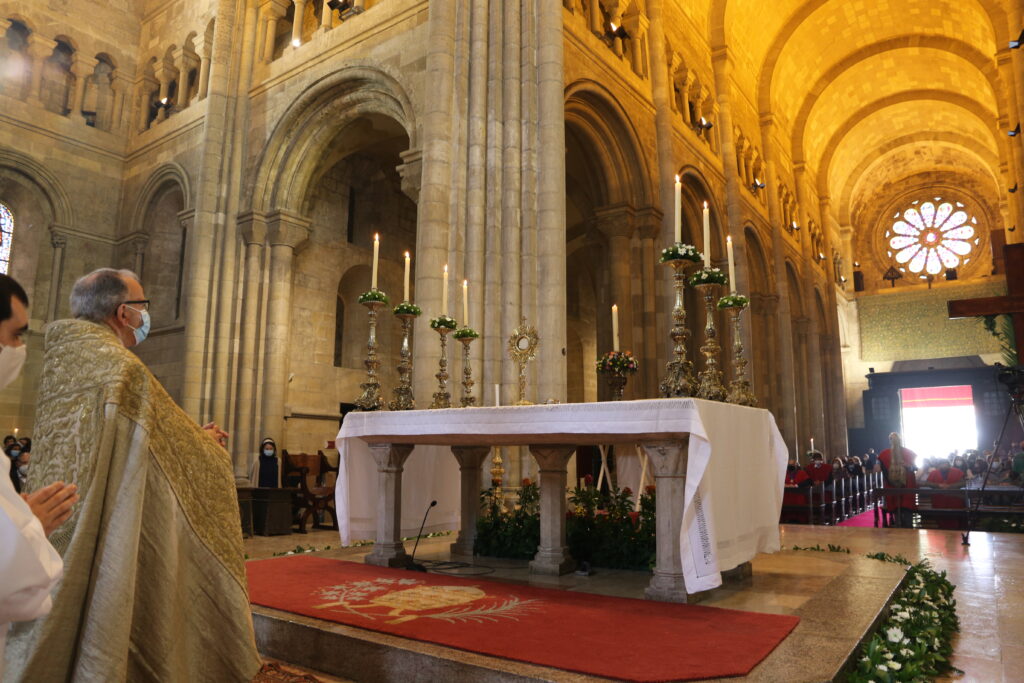
Lisbon Cathedral, also known as the Cathedral of Saint Mary Major or Sé de Lisboa, is the oldest and most historically significant church in Portugal’s capital. Established in 1147 on the site of Lisbon’s former main mosque following the Siege of Lisbon, it has served as a religious and cultural landmark for nearly nine centuries. The cathedral has witnessed numerous architectural changes blending Romanesque, Gothic, and Baroque elements, reflecting its resilience through earthquakes and centuries of history.

It holds deep spiritual importance as the seat of the Patriarchate of Lisbon and preserves precious relics, including those of Saint Vincent of Saragossa and Saint Anthony’s baptismal connections. Its Treasury Museum houses one of Portugal’s most magnificent liturgical artifacts, the Patriarchal Monstrance, making the cathedral a vital destination for visitors interested in history, art, and religious heritage.

Founded: Construction began in 1147
Annual Visitors: Approximately 350,000
Architectural Styles: Romanesque, Gothic, Baroque
Status: Portuguese National Monument since 1910

Why Visit Lisbon Cathedral?

Discover a Chronicle of Lisbon’s History

As the city's oldest church, consecrated in 1147, the Cathedral stands as a physical timeline of Lisbon. Visitors can trace its architectural evolution from its original Romanesque fortress-like structure, built atop a former mosque, through subsequent Gothic additions and Baroque embellishments.

Explore the Ancient Romanesque Architecture

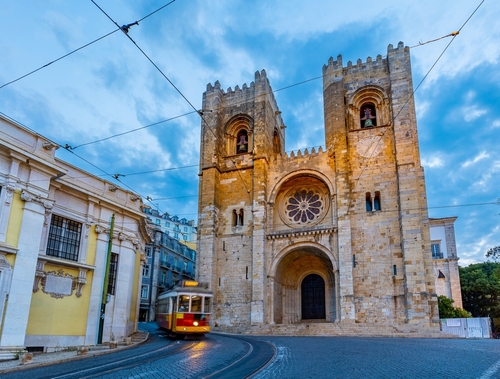
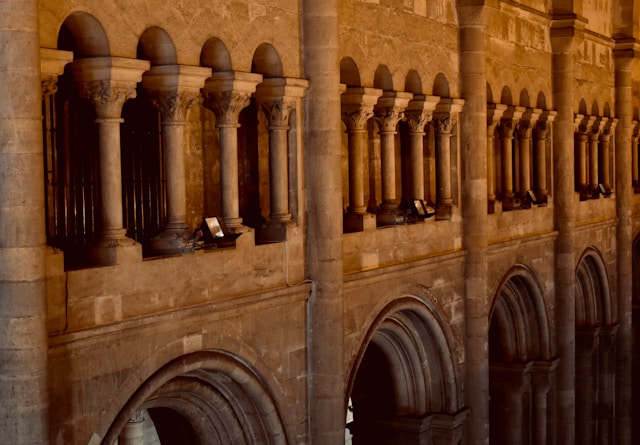
The Cathedral's imposing twin-towered facade is one of the most significant surviving examples of Romanesque style in Portugal. Its sturdy, fortified appearance reflects its origins as both a place of worship and a defensive structure built during the Christian Reconquista.

See the Gothic Cloister and Archaeological Digs

Behind the main body of the church lies a serene 14th-century Gothic cloister, offering a peaceful contrast to the main nave. Beneath the courtyard, ongoing archaeological excavations reveal layers of the city's past, including Roman and Visigothic ruins, offering a unique glimpse into the Cathedral's foundations.

Witness the Baptism Site of Saint Anthony

The Cathedral holds special significance as the location where Saint Anthony of Padua (Fernando de Bulhões) was baptized in 1195. A small, venerated chapel or font within the church marks this important spiritual connection to one of the Catholic Church's most popular saints.

Visit the Treasury and Relics

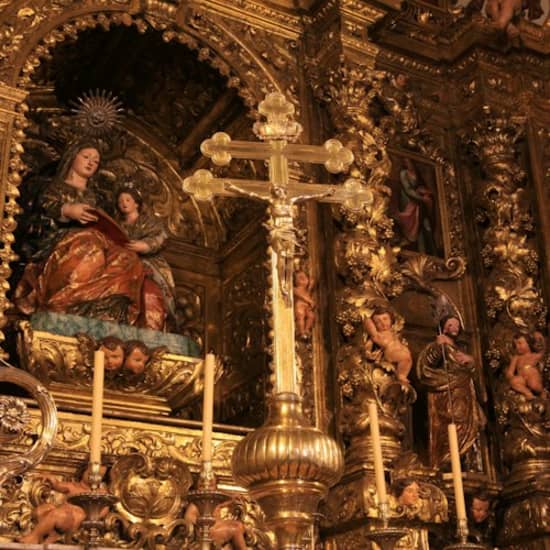
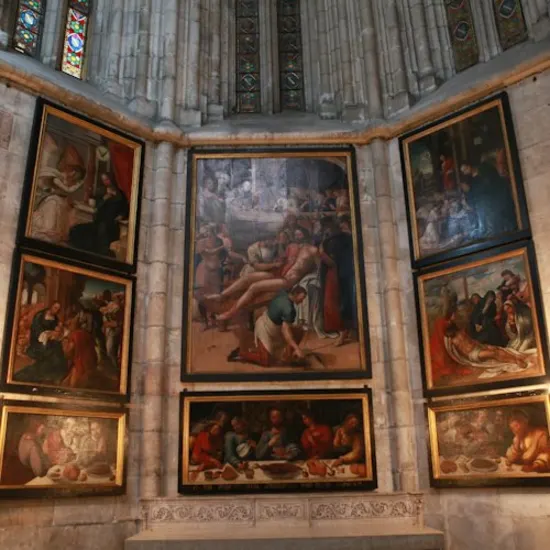
The Cathedral's upper-level Treasury (Tesouro) houses a collection of valuable liturgical vestments, manuscripts, and sacred art. It also protects several important relics, including those associated with Saint Vincent of Saragossa, the patron saint of Lisbon.

Horaires

Cathédrale de Lisbonne (Google Maps)

De novembre à mars
Du lundi au samedi : de 10 h à 18 h

D’avril à octobre
Du lundi au samedi : de 09 h 30 à 19 h 00

Les dimanches et les jours de fête religieuse: fermé
(Jour de Noël et Jour de l’An : fermé)

How to Get There?

La cathédrale de Lisbonne est située au cœur du quartier historique de l’Alfama, juste au-dessus de la Praça do Comércio et du Tage. En raison de son emplacement sur une colline escarpée et des rues étroites qui l’entourent, il est fortement recommandé de s’y rendre en transports en commun ou à pied.

Adresse: Largo da Sé, 1 1100-585 Lisbonne, Portugal

Things to Know Before Visiting Lisbon Cathedral

Dress modestly out of respect for this active place of worship; aim to cover your shoulders and knees.

The main central nave is generally free to enter, but there is a paid ticket required to access the Cloister, Treasury, and Archaeological Site.

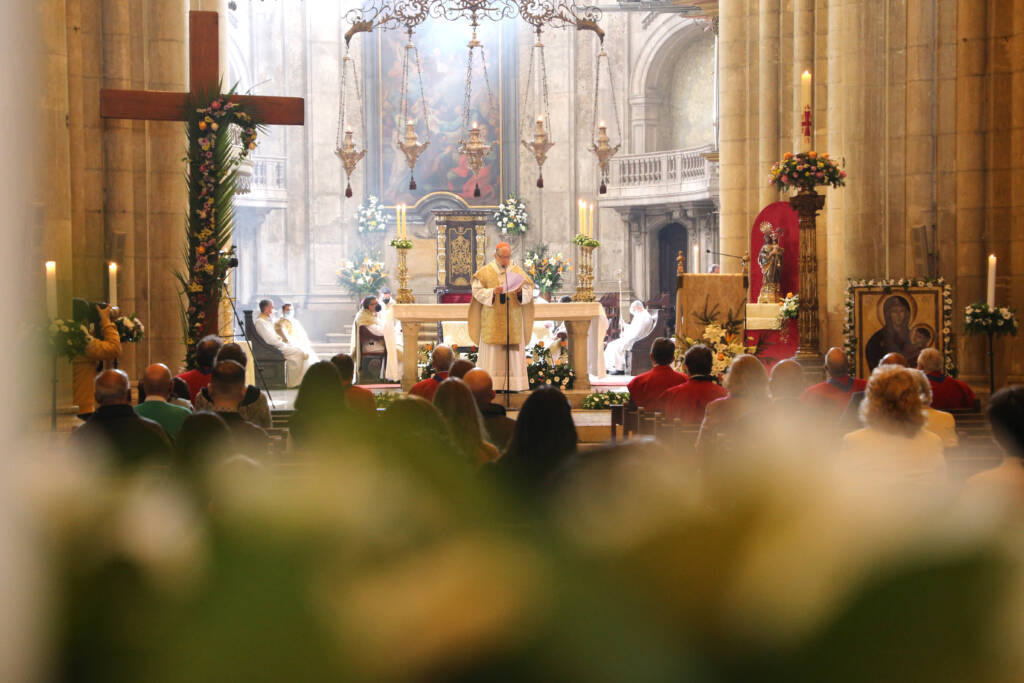
The Cathedral is closed to tourists on Sundays and Holy Days as it is entirely reserved for religious services.

Plan to arrive early in the morning, shortly after opening, to enjoy a quieter experience and avoid large tour groups.

The Lisbon Cathedral is not included in the Lisboa Card, so you will need to purchase a separate ticket for the paid sections.

Photography is usually permitted without flash, but be sure to maintain silence and respect those who are praying.

The site is located at the start of the historic Alfama district, so expect steep, uneven cobblestone streets around the building.

The most picturesque way to arrive is by taking the iconic and often crowded Tram 28E, which stops directly outside the entrance.

Allow approximately 45 minutes to one hour to comfortably explore all areas, including the Cloister and Treasury.

Be aware that the Cloister and Treasury may have limited accessibility due to steps and historic architecture.

Additional Info

As a historic place of worship, the Lisbon Cathedral provides essential facilities to ensure a comfortable visit.

Restrooms are available for visitor use within the complex.

Due to the historical nature and age of the building, the services are limited to maintain the architectural integrity of the site.

There are no expansive waiting rooms or cafes directly within the main structure.

Accessibilité

The Cathedral makes efforts to accommodate all visitors, though its centuries-old architecture presents some inherent challenges.

Main Nave: Access to the main body of the church is generally possible for visitors using wheelchairs or those with limited mobility, often via a ramp or flat entrance point.

Paid Sections: Access to the older, ticketed areas like the Gothic Cloister, Treasury, and Archaeological Site may involve steps and uneven flooring, which can restrict access for some mobility devices. Visitors are advised to inquire at the entrance for the most accessible route or alternative viewing options.

Interesting Facts about Lisbon Cathedral

The Lisbon Cathedral, known as the Sé de Lisboa, is the oldest church in the city.

It was consecrated in 1147 by King Afonso I after the Christian reconquest of Lisbon.

The Cathedral was built on the site of a former main mosque (Aljama) during the Moorish period.

Its original architectural style is heavily Romanesque, characterized by its thick walls and imposing, fortified appearance.

The façade features two massive, crenellated towers that give it a defensive, castle-like look.

A significant 14th-century Gothic cloister, commissioned by King Dinis, is located directly behind the main chapel.

Archaeological excavations beneath the cloister have uncovered Roman, Visigothic, and Moorish foundations.

It is the site where Saint Anthony of Padua, one of the most revered Catholic saints, was baptized in 1195.

The main chapel suffered catastrophic damage in the Great Lisbon Earthquake of 1755, though the Romanesque structure largely survived.

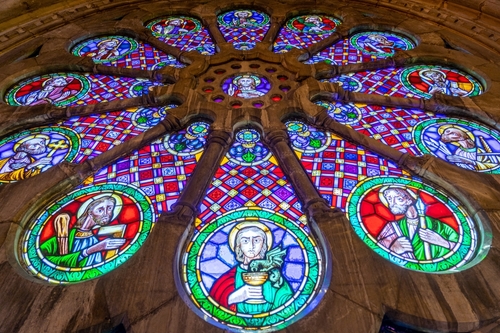
The large Gothic rose window on the main façade is a meticulous 20th-century reconstruction based on original fragments.

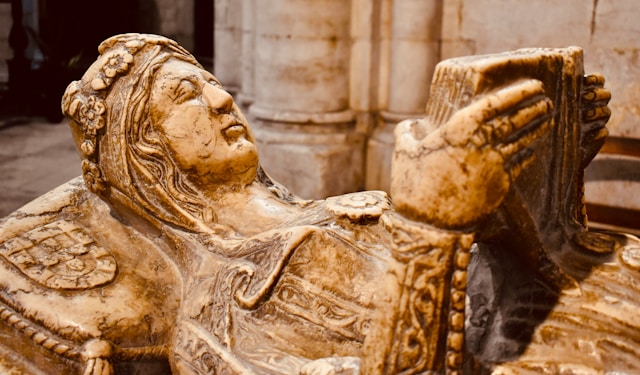
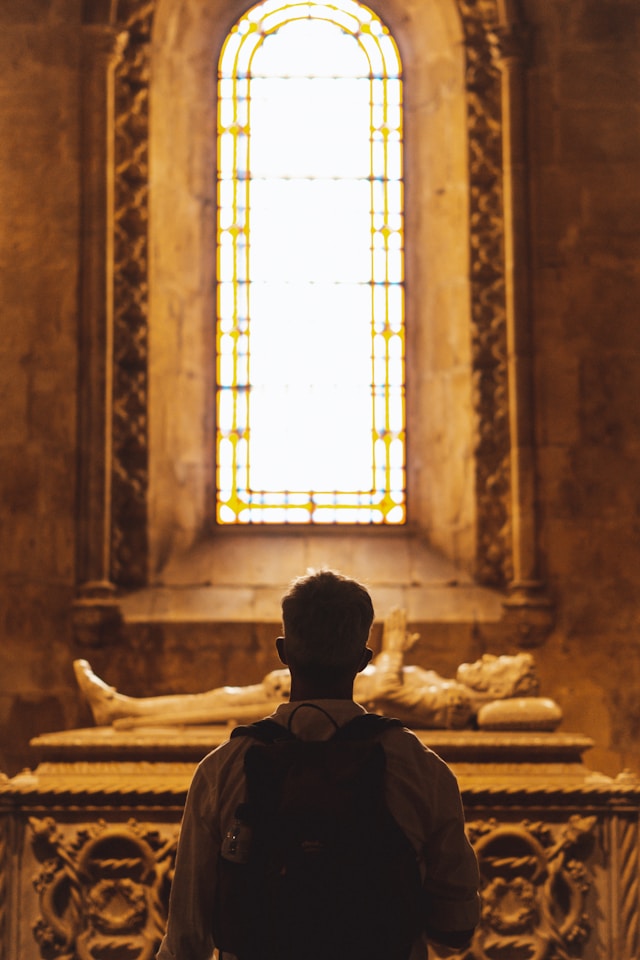
Inside, visitors can see the sarcophagi of notable figures, including the 14th-century tomb of King Afonso IV.

The Cathedral's Treasury houses valuable liturgical vestments, ancient manuscripts, and precious relics.

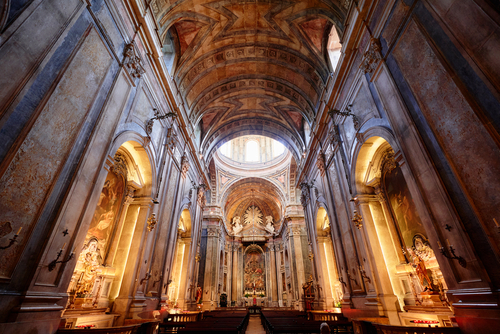
Due to numerous alterations over the centuries, the Cathedral is a mix of Romanesque, Gothic, Baroque, and Neoclassical styles.

It officially holds the title of the Metropolitan Cathedral of Santa Maria Maior, dedicated to Saint Mary Major.

The Sé is the starting point for the annual pilgrimage route in Lisbon dedicated to Saint Anthony.

FAQs about Lisbon Cathedral

Quel est le nom officiel de la cathédrale de Lisbonne ?

Son nom officiel est « Cathédrale métropolitaine de Santa Maria Maior », mais on l’appelle communément la « Sé de Lisboa ».

Quel âge a la cathédrale de Lisbonne ?

Sa construction a débuté en 1147, immédiatement après la conquête chrétienne de Lisbonne, ce qui en fait la plus ancienne église de la ville.

À quoi servait le site avant la construction de la cathédrale ?

La cathédrale a été délibérément construite à l’emplacement de l’ancienne grande mosquée de Lisbonne, l’Aljama.

Quels sont les principaux styles architecturaux que l’on peut observer dans la cathédrale ?

L’edifice présente un mélange remarquable de styles roman, gothique et baroque, témoignant de plusieurs siècles de transformations.

Y a-t-il un cloître à la cathédrale de Lisbonne ?

Oui, un cloître gothique remarquable datant du XIVe siècle se trouve derrière la chapelle principale, où se déroule également une fouille archéologique.

La cathédrale de Lisbonne a-t-elle un lien avec saint Antoine de Padoue ?

Oui, la cathédrale revêt une importance historique, car c’est là que saint Antoine (Fernando de Bulhões) a été baptisé en 1195.

Quelles collections particulières sont conservées dans la cathédrale ?

Le Trésor (Tesouro), situé à l’étage supérieur, abrite de précieux objets religieux, notamment des vêtements liturgiques, des manuscrits et des reliques de saint Vincent.

L’entrée à la cathédrale de Lisbonne est-elle payante ?

L’accès à la nef centrale pour la prière est gratuit, mais un billet payant est nécessaire pour accéder au cloître, au trésor et au site archéologique.

Quelles sont les heures d’ouverture de la cathédrale pour les visiteurs ?

Les horaires d’ouverture varient selon la saison, mais le site est généralement ouvert du lundi au samedi, de 09 h 30 ou 10 h à 18 h ou 19 h.

Puis-je visiter la cathédrale un dimanche ?

Non, la cathédrale est fermée aux visites touristiques les dimanches et jours fériés, car elle est entièrement réservée aux offices religieux.

Y a-t-il un code vestimentaire à respecter pour les visiteurs ?

Il est demandé aux visiteurs de s’habiller de manière pudique par respect pour ce lieu de culte, ce qui implique généralement de se couvrir les épaules et les genoux.

Quel moyen de transport en commun s’arrête juste devant la cathédrale ?

The iconic Tram 28E stops directly at the "Sé" stop, which is the most convenient way to arrive.

Are the paid sections of the Cathedral wheelchair accessible?

Due to the building's age, the Cloister and Treasury often involve steps and uneven flooring, which limits accessibility for wheelchairs.

Is the Lisbon Cathedral covered by the Lisboa Card?

No, a separate entry ticket must be purchased for the paid sections of the Cathedral complex, as it is not included in the Lisboa Card.

Ce site Internet propose des billets officiels pour les lieux mentionnés, vendus par Tourism Tickets. Veuillez toutefois noter qu’il ne s’agit du site officiel d’aucun de ces lieux.

Les images et vidéos présentes sur ce site peuvent contenir des éléments visuels créés ou améliorés à l’aide de l’intelligence artificielle. Elles sont fournies à titre purement illustratif.